
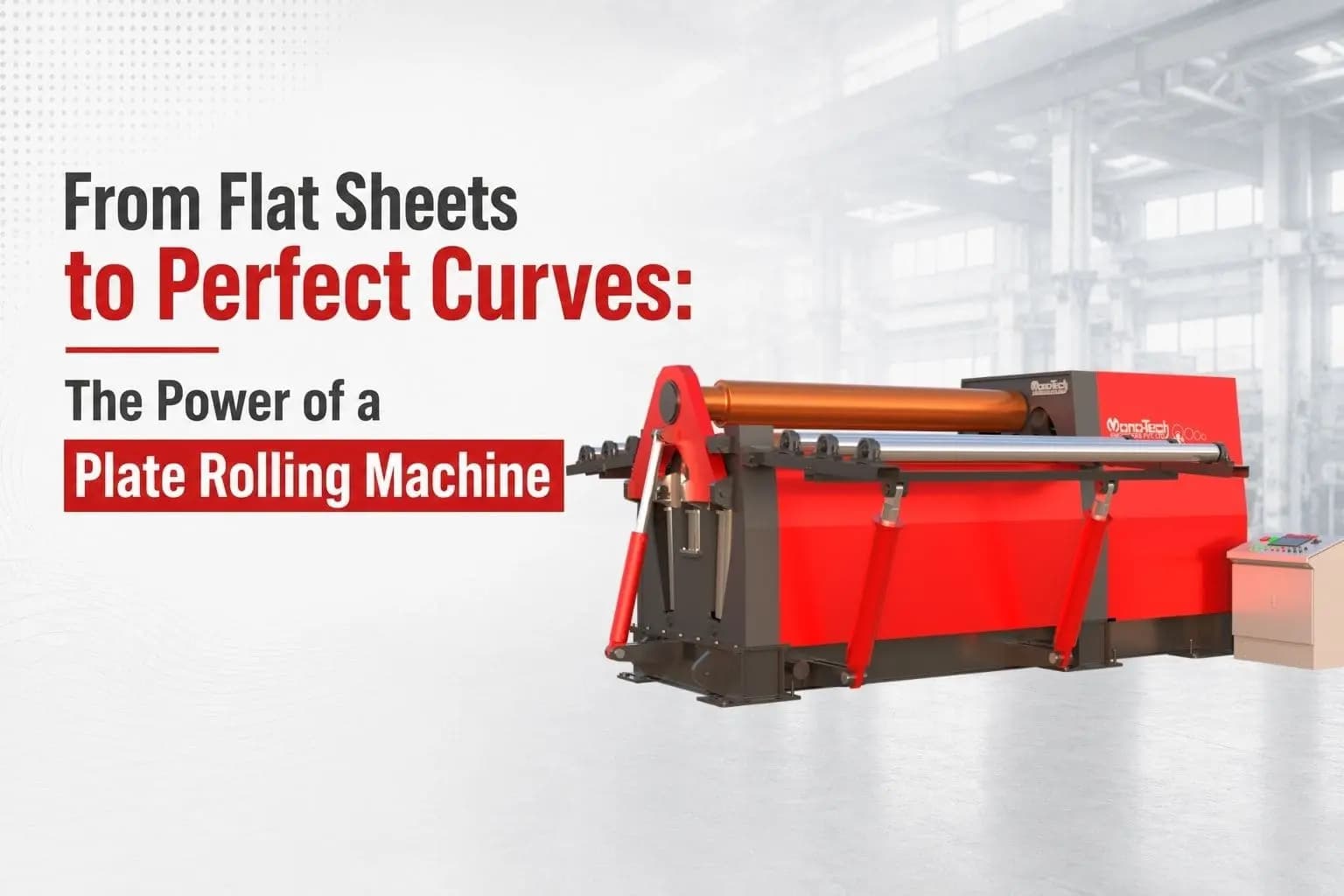
From Flat Sheets to Perfect Curves: The Power of a Plate Rolling Machine
Metal fabrication often begins with a simple flat sheet or plate, but many industrial applications require that material to be transformed into precise curves, cylinders, cones, or other complex shapes. This is where a Plate Rolling Machine plays an important role.
Designed to bend metal plates accurately and consistently, these machines are widely used across industries such as construction, pressure vessel manufacturing, shipbuilding, oil and gas, chemical processing, and heavy engineering. With the right machine, manufacturers can improve production efficiency while achieving the required shape and dimensional accuracy.
What Is a Plate Rolling Machine?
A Plate Rolling Machine is an industrial machine used to bend metal plates into curved or cylindrical shapes. Depending on the machine configuration, plates can be rolled into different diameters and shapes while maintaining controlled bending accuracy.
Modern machines are available in different configurations, including 3 Roll Plate Rolling Machines and 4 Roll Plate Rolling Machines. Hydraulic and CNC-controlled systems can further improve operating efficiency and repeatability for demanding fabrication applications.
The basic rolling process involves passing a metal plate between rollers that apply controlled pressure. As the plate moves through the rollers, it gradually takes the desired curved shape.
How Does a Plate Rolling Machine Work?
The plate rolling process may vary depending on the machine design, but the basic principle remains the same.
First, the metal plate is positioned correctly between the rollers. The rollers then apply pressure to the plate while it is moved through the machine. With controlled roller movement and adjustment, the flat plate gradually develops the required curvature.
A modern Metal Plate Rolling Machine can provide greater control over:
Plate thickness
Rolling diameter
Bending accuracy
Production speed
Repeatability
Final shape quality
For high-volume manufacturing, automated controls can make the process faster and more consistent while reducing manual intervention.
Why Is Plate Rolling Important in Metal Fabrication?
Many industrial products require curved metal components. Manually producing these shapes can be time-consuming and may result in inconsistent dimensions.
A Plate Rolling Machine for Metal Fabrication helps manufacturers achieve controlled and repeatable results. It can also reduce production time and improve overall workflow.
Some important advantages include:
1. Improved Bending Accuracy
Accurate plate bending is essential when components need to fit together during fabrication or assembly. A properly configured rolling machine helps maintain consistent dimensions throughout the production process.
2. Higher Productivity
Industrial fabrication projects often involve large quantities of metal plates. A suitable Industrial Plate Rolling Machine can process plates efficiently, helping manufacturers complete projects within shorter production cycles.
3. Consistent Results
Consistency is particularly important when multiple components need to have the same diameter or curvature. Automated and CNC-controlled systems can help maintain repeatability across different production batches.
4. Versatile Applications
Plate rolling equipment can be used with different materials and plate sizes depending on its specifications. This makes it useful for a wide range of fabrication requirements.
5. Reduced Manual Work
Modern machines can automate several stages of the rolling operation. This reduces dependence on manual adjustment and allows operators to focus more on machine monitoring and quality control.
3 Roll vs. 4 Roll Plate Rolling Machine
Choosing between a 3 Roll Plate Rolling Machine and a 4 Roll Plate Rolling Machine depends on the fabrication requirements.
A 3-roll machine is commonly used for general plate bending applications and can provide flexibility for different types of fabrication work.
A 4-roll machine provides greater control over the plate during the rolling process. Its design can simplify plate positioning and improve productivity, particularly in applications requiring repeated production and controlled rolling.
The ideal choice depends on factors such as plate thickness, material, plate width, required diameter, production volume, and desired automation level.
Applications of a Plate Rolling Machine
A Heavy Duty Plate Rolling Machine can be used for a variety of industrial applications. Common applications include:
Pressure vessel manufacturing
Storage tank fabrication
Boiler manufacturing
Shipbuilding
Oil and gas equipment
Chemical processing equipment
Structural fabrication
Wind tower manufacturing
Industrial ducting
Pipeline components
Heavy engineering projects
The machine configuration should be selected according to the material, thickness, width, rolling diameter, and production requirements of the application.
Choosing the Right Plate Rolling Machine
Selecting the right machine is an important investment decision. Manufacturers should evaluate several technical and operational factors before purchasing equipment.
Plate Thickness and Width
The machine must have sufficient capacity to handle the maximum plate thickness and width required for production.
Material Type
Different materials have different strength and forming characteristics. The machine should be suitable for the materials being processed, such as mild steel, stainless steel, or other industrial metals.
Required Rolling Diameter
The minimum and maximum rolling diameter should match the products being manufactured. This is especially important for pressure vessels, tanks, and cylindrical components.
Machine Configuration
Depending on the application, manufacturers can consider hydraulic, mechanical, CNC, 3-roll, or 4-roll configurations.
Automation and Control
For high-volume production, CNC controls and automated functions can improve repeatability, reduce setup time, and simplify machine operation.
Manufacturer Support
Choosing a reliable Plate Rolling Machine Manufacturer is equally important. After-sales service, spare parts availability, technical support, machine installation, and operator training can significantly affect long-term machine performance.
Why Modern Plate Rolling Machines Matter
As fabrication industries become more focused on productivity and precision, advanced plate rolling technology is becoming increasingly valuable.
A modern Metal Sheet Rolling Machine can help manufacturers handle demanding production requirements while maintaining consistent quality. Features such as hydraulic systems, CNC controls, precision rollers, and automated adjustments can make the rolling process more efficient.
However, technology alone does not guarantee good results. Proper machine selection, operator training, maintenance, and process control are equally important.
Final Thoughts: Plate Rolling Machine
From a flat metal plate to a precisely formed curve, the rolling process plays a crucial role in modern fabrication. A reliable Plate Rolling Machine can help manufacturers achieve better accuracy, higher productivity, and consistent results across a wide range of applications.
Whether the requirement involves a standard fabrication project or heavy-duty industrial production, selecting the right machine based on plate size, thickness, material, diameter, and production volume is essential.
For manufacturers looking to improve their metal fabrication capabilities, investing in the right plate rolling solution can be an important step toward faster production and better-quality finished components.
FAQs: Plate Rolling Machine
1. What is a Plate Rolling Machine used for?
A Plate Rolling Machine is used to bend metal plates into cylindrical, curved, conical, and other required shapes for industrial fabrication.
2. Which industries use Plate Rolling Machines?
They are commonly used in pressure vessel, boiler, shipbuilding, oil and gas, chemical, construction, and heavy engineering industries.
3. What is the difference between a 3-roll and 4-roll machine?
A 3-roll machine uses three rollers for plate bending, while a 4-roll machine provides additional control over plate positioning and rolling, making it suitable for applications requiring greater productivity and repeatability.
4. How do I choose the right Plate Rolling Machine?
Consider plate thickness, plate width, material type, required rolling diameter, production volume, machine configuration, and automation requirements.
5. Is a hydraulic Plate Rolling Machine suitable for heavy-duty applications?
Yes. Depending on its specifications and capacity, a Hydraulic Plate Rolling Machine can be suitable for demanding heavy-plate fabrication applications.