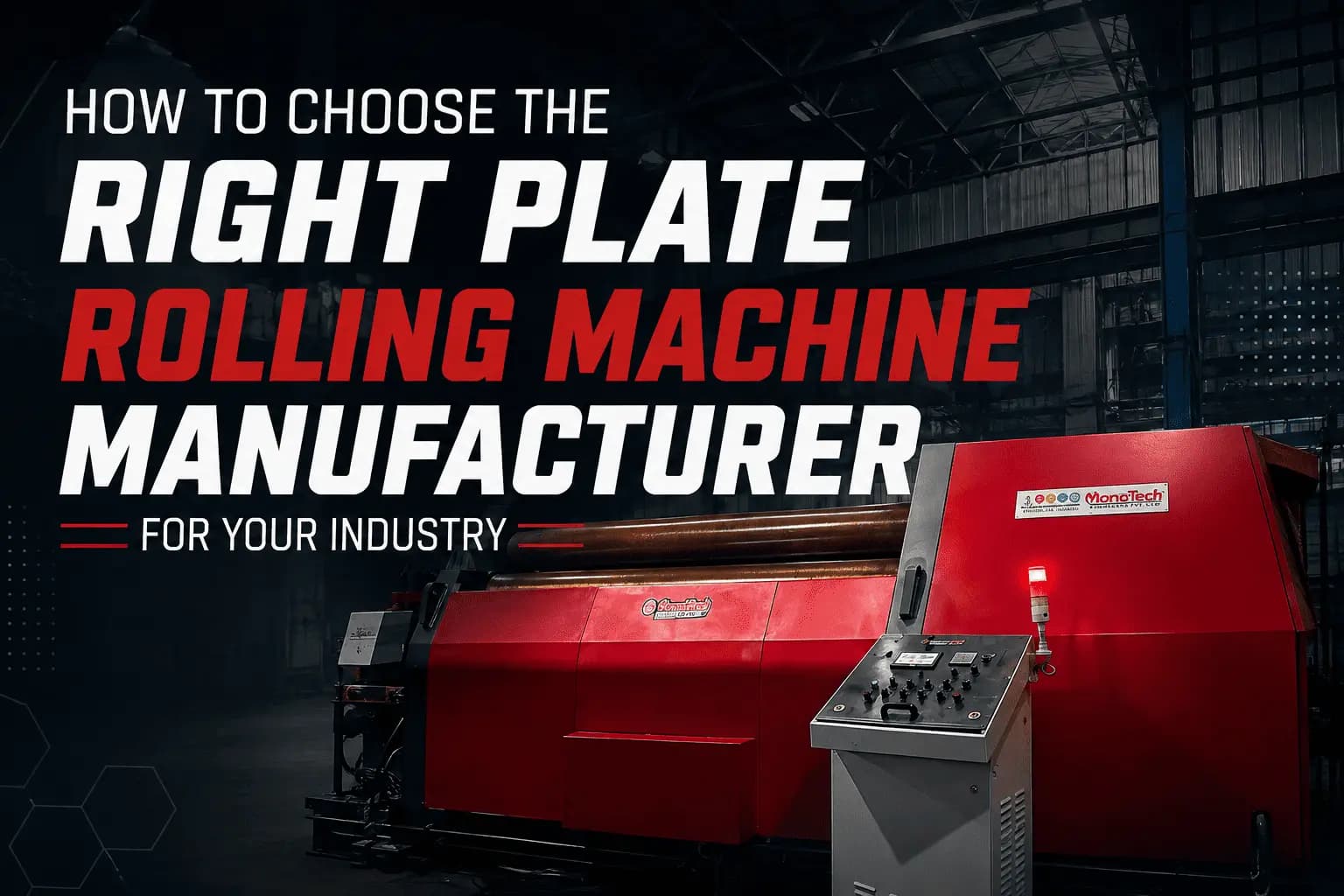
How to Choose the Right Plate Rolling Machine Manufacturer for Your Industry
Choosing the right Plate Rolling Machine Manufacturer is an important decision for industries that depend on accurate, reliable, and efficient metal forming. A plate rolling machine is a significant investment, and the right equipment can directly influence production quality, operating costs, and long-term productivity.
With several Plate Rolling Machine Manufacturers available in the market, it can be difficult to determine which manufacturer is best suited to your specific requirements. Factors such as machine capacity, technology, customization, build quality, after-sales support, and industry experience should all be evaluated before making a decision.
This guide explains the key factors you should consider when selecting an industrial plate rolling machine manufacturer.
Why Choosing the Right Plate Rolling Machine Manufacturer Matters
A plate rolling machine must deliver consistent results under demanding production conditions. Selecting an experienced manufacturer helps ensure that the machine is designed according to your material, thickness, plate width, and production requirements.
A reliable Plate Rolling Machine Manufacturer can also provide technical guidance before purchase and ongoing support after installation. This can reduce downtime, improve productivity, and extend the service life of your equipment.
1. Check the Manufacturer's Industry Experience
Industry experience is one of the first factors to consider. A manufacturer with extensive experience in plate bending and metal forming is more likely to understand the challenges associated with different materials and applications.
Look for a company that has supplied machines to industries similar to yours, such as:
Heavy engineering
Pressure vessel manufacturing
Structural fabrication
Boilers and heat exchangers
Oil and gas equipment
Shipbuilding
Infrastructure and construction
Industrial machinery manufacturing
An experienced Plate Rolling Machine Manufacturer in India should be able to recommend a suitable machine based on your production requirements rather than simply offering a standard model.
2. Evaluate Machine Capacity and Specifications
Before selecting a manufacturer, clearly define your required machine capacity. Important specifications include:
Maximum plate thickness
Maximum plate width
Minimum rolling diameter
Material type and grade
Yield strength of material
Rolling capacity
Pre-bending capacity
Machine configuration
Motor and hydraulic system specifications
For heavy industrial applications, a Heavy Duty Plate Rolling Machine may be required to process thick and high-strength plates efficiently.
The manufacturer should provide accurate technical specifications and explain the actual working capacity of the machine.
3. Choose the Right Machine Configuration
Different production requirements may require different machine configurations.
A 3 Roll Plate Rolling Machine can be suitable for various general fabrication applications, while a 4 Roll Plate Rolling Machine can offer advantages in terms of pre-bending, positioning, and production efficiency.
Similarly, a Hydraulic Plate Rolling Machine can be preferred for applications involving heavier plates and demanding industrial workloads.
The right manufacturer should help you select the configuration according to your material, thickness, diameter, and production volume.
4. Consider Automation and Control Technology
Modern plate rolling operations increasingly rely on automation to improve repeatability and reduce operator dependency.
Depending on your production requirements, you may consider an Automatic Plate Rolling Machine or CNC-controlled system with features such as:
Digital control systems
Programmable rolling sequences
Hydraulic synchronization
Automatic positioning
Repeatable rolling parameters
Operator-friendly controls
Safety systems
For high-volume manufacturing, advanced automation can improve consistency while reducing setup and production time.
5. Look at Machine Build Quality
Machine construction directly affects performance and service life. A quality Metal Plate Rolling Machine should have a rigid structure capable of handling the forces generated during rolling.
Pay attention to:
Frame construction
Roll material and hardness
Bearing quality
Hydraulic components
Drive system
Welding and fabrication quality
Electrical and control components
Surface finishing and machining accuracy
Ask the manufacturer about the materials and manufacturing processes used for critical machine components.
6. Ask About Customization Options
Not every industry has the same production requirements. Standard machines may not always provide the ideal solution for specialized applications.
A capable manufacturer should be able to offer customized solutions involving:
Special plate widths
Higher rolling capacities
Customized roll configurations
Automation upgrades
CNC controls
Special material handling requirements
Industry-specific accessories
A Plate Rolling Machine Supplier that provides engineering-based customization can be particularly valuable for specialized manufacturing operations.
7. Compare Quality Instead of Only Plate Rolling Machine Price
Price is naturally an important consideration, but it should not be the only deciding factor.
When comparing Plate Rolling Machine Price, consider the total cost of ownership, including:
Initial machine cost
Installation
Energy consumption
Maintenance
Spare parts
Operator requirements
Downtime
Productivity
Expected service life
A machine with a lower initial price may become more expensive if it requires frequent maintenance or produces inconsistent results.
The goal should be to select a machine that offers the right balance between investment, performance, reliability, and productivity.
8. Check After-Sales Service and Technical Support
After-sales support is an essential factor when choosing a Plate Rolling Machine Manufacturer.
Before purchasing, ask about:
Installation and commissioning
Operator training
Warranty
Spare parts availability
Preventive maintenance
Remote technical support
Service response time
Machine troubleshooting
Good technical support can help minimize production interruptions and keep your equipment operating efficiently.
9. Review Previous Installations and Customer Experience
Ask the manufacturer for examples of previous installations, especially machines supplied for applications similar to yours.
Customer references can help you understand:
Machine reliability
Rolling accuracy
Manufacturing quality
Service support
Installation process
Long-term machine performance
You can also review the manufacturer's website, technical case studies, videos, and machine demonstrations before making a final decision.
10. Select a Manufacturer That Understands Your Application
The best Plate Rolling Machine Manufacturer should understand more than machine specifications. They should understand what you are trying to manufacture.
For example, rolling requirements for pressure vessels can differ from those for structural components or large-diameter pipes. Material grade, plate thickness, diameter, production volume, and required tolerances all influence machine selection.
Discuss your complete application with the manufacturer before finalizing the machine.
Why Monotech Engineers Can Be a Reliable Choice
Monotech Engineers focuses on industrial metal forming and fabrication machinery designed for demanding manufacturing environments.
Its plate rolling solutions can be considered for applications where accurate plate bending, robust construction, and reliable production performance are important. Depending on the application, manufacturers can evaluate configurations such as hydraulic and multi-roll plate rolling machines according to plate thickness, width, material, and required rolling diameter.
When selecting a machine, businesses should discuss their exact production requirements with the technical team to determine the appropriate configuration and specifications.
Final Checklist Before Choosing a Plate Rolling Machine Manufacturer
Before placing your order, make sure you have evaluated:
Manufacturer's industry experience
Machine capacity and specifications
Plate thickness and width requirements
Required rolling diameter
3-roll or 4-roll configuration
Hydraulic and automation requirements
Machine construction and component quality
Customization capabilities
Total cost of ownership
Installation and training
Spare parts availability
After-sales technical support
Previous customer installations
Conclusion: Plate Rolling Machine Manufacturer
Choosing the right Plate Rolling Machine Manufacturer is about more than comparing machine prices. The right partner should provide suitable technology, robust machine construction, application-specific engineering, customization, and dependable after-sales support.
By carefully evaluating machine specifications, automation, build quality, manufacturer experience, and long-term service capabilities, industries can make a more informed investment and achieve reliable plate rolling performance.
For businesses looking for an experienced Plate Rolling Machine Manufacturer in India, evaluating technical capability and application expertise should be the first step toward selecting the right machine for long-term production requirements.
FAQs: Plate Rolling Machine Manufacturer
1. How do I choose the right plate rolling machine manufacturer?
Evaluate the manufacturer's industry experience, machine quality, technical specifications, customization capabilities, previous installations, and after-sales support.
2. What factors determine plate rolling machine capacity?
Plate thickness, plate width, material grade, yield strength, rolling diameter, and pre-bending requirements are key factors that determine machine capacity.
3. Is a 3-roll or 4-roll plate rolling machine better?
Both configurations have different advantages. A 4-roll machine can provide efficient pre-bending and positioning, while 3-roll machines can be suitable for various general rolling applications.
4. What should I consider besides plate rolling machine price?
Consider machine quality, productivity, energy consumption, maintenance, spare parts, service support, expected machine life, and total cost of ownership.
5. Why is after-sales service important for a plate rolling machine?
Reliable technical support, spare parts, installation, training, and maintenance services can reduce downtime and help maintain machine performance over its operating life.