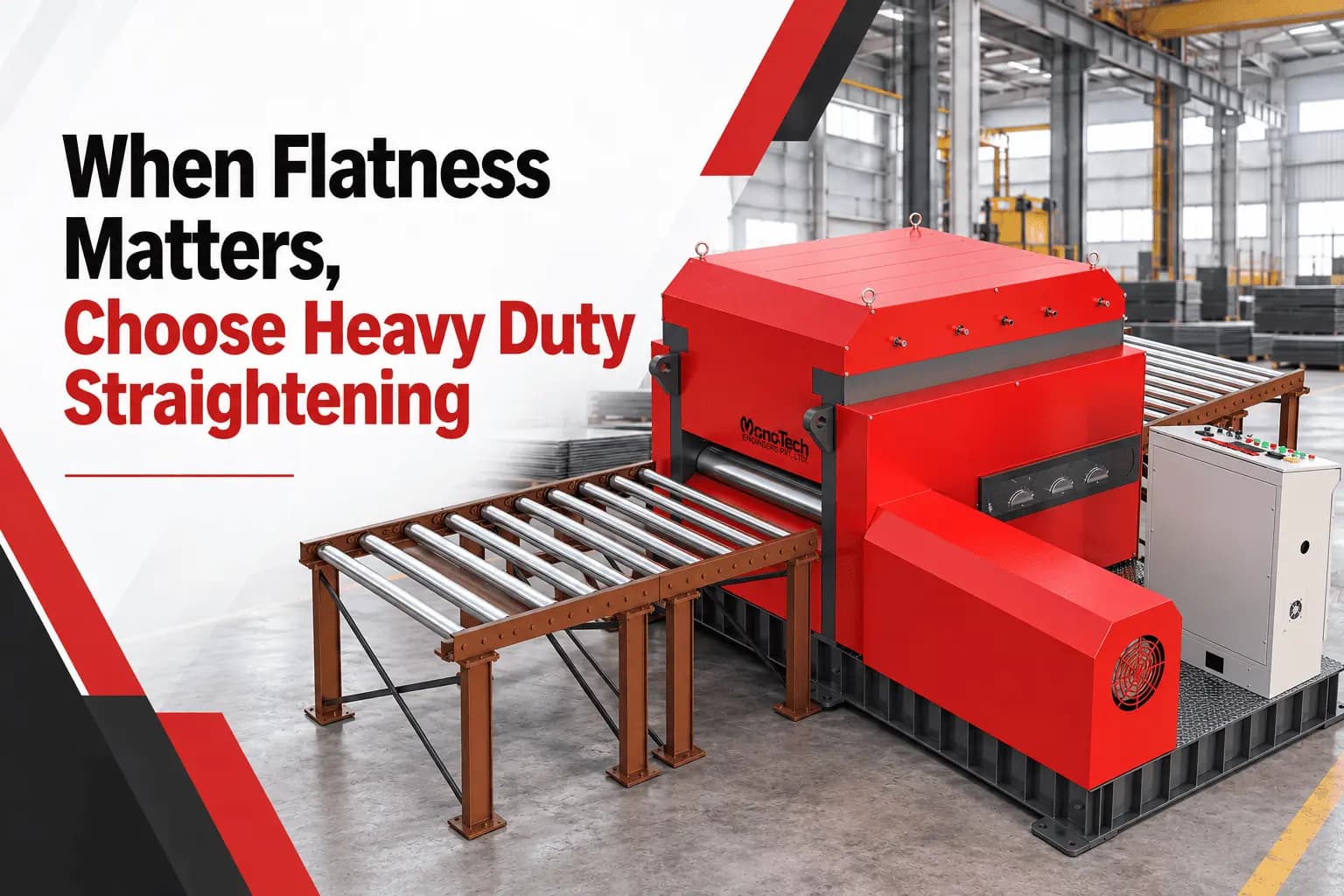
When Flatness Matters, Choose Heavy Duty Straightening
A sheet that looks flat may still cause problems during cutting, bending, welding, or assembly. Even small variations in flatness can affect fit, slow production, and lead to rework. For manufacturers processing demanding sheet metal components, straightening is a critical step in achieving consistent results.
A Heavy Duty Sheet Straightener Machine helps correct deformation before the sheet moves to the next operation. By improving flatness at the right stage, manufacturers can reduce handling issues and produce components more consistently.
Why Do Metal Sheets Lose Flatness?
Sheets can develop bends, waves, and internal stresses during rolling, cutting, transportation, or storage. Laser cutting may also release existing stresses in the material, causing a part to distort after it has been cut.
These problems often become more visible downstream. A distorted sheet may be difficult to position accurately on a press brake, while an uneven component may require extra work before welding or assembly. Correcting flatness early helps prevent those issues from carrying through the production line.
How Does Heavy Duty Sheet Straightening Work?
A Heavy Duty Sheet Straightening Machine passes material through a series of rollers that apply controlled bending. This process helps reduce unevenness and produces a flatter sheet or component.
The right machine setup depends on the material, thickness, width, and level of deformation. For heavier materials and demanding production conditions, machine rigidity and precise adjustment are especially important.
A suitable Sheet Metal Straightening Machine can process material before fabrication or straighten components after cutting, depending on the application. This gives manufacturers a practical way to improve material consistency at different stages of production.
What Can Better Flatness Improve?
More Consistent Fabrication
Flatter material is easier to position, measure, and process. It can help operators achieve more consistent results during cutting, bending, and assembly.
Less Rework
When warped material enters production, teams may need to make manual corrections or repeat operations. An Industrial Sheet Straightening Machine helps address deformation before it creates further work.
Smoother Material Handling
Uneven sheets can be harder to feed into equipment or stack after processing. Improved flatness can make handling more predictable across the production line.
Better Fit During Assembly
Components that sit flat are easier to align for welding and assembly. This is especially valuable when multiple sheet metal parts must fit together accurately.
Choosing the Right Machine for Your Application
The best straightening solution starts with the material you process. Before selecting a Sheet Leveling Machine, consider:
Material type and thickness range
Sheet or component width
Typical level of deformation
Required flatness for the next operation
Production volume and handling needs
A Metal Sheet Flattening Machine should be selected for the actual work it needs to perform. Sharing sample components and production requirements with the machine manufacturer can help determine a suitable configuration.
Heavy Duty Straightening from Monotech Engineers
At Monotech Engineers, we understand that flatness affects more than the appearance of a sheet. It influences how reliably material moves through fabrication and how accurately finished parts come together.
Our sheet straightening solutions are designed around manufacturing requirements, from material dimensions to the demands of the production process. If warped sheets or cut components are creating rework in your facility, the right heavy duty straightening solution can help you build a more consistent workflow.
Discuss your material and flatness requirements with Monotech Engineers to identify a suitable sheet straightening machine for your application.