
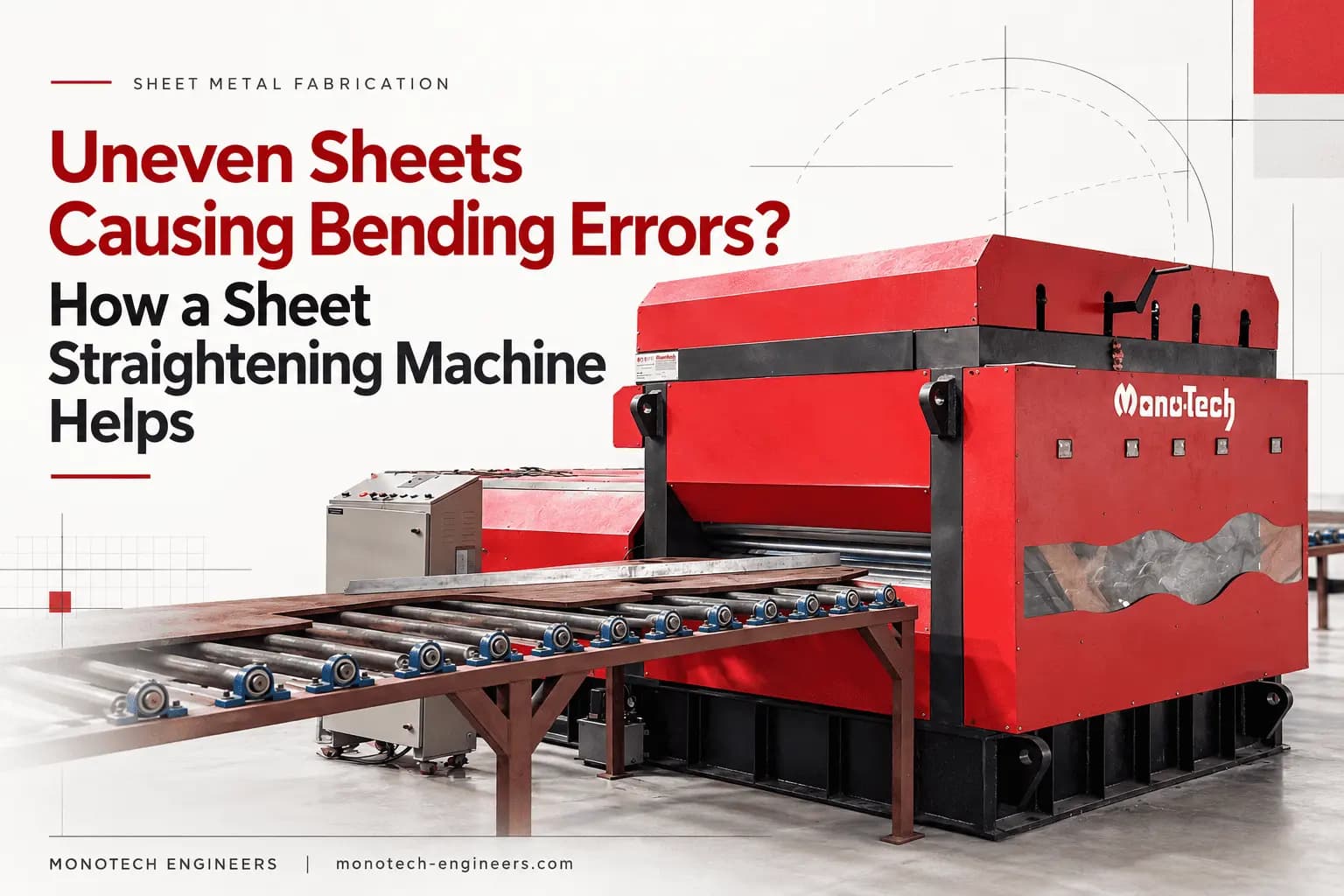
Uneven Sheets Causing Bending Errors? How a Sheet Straightening Machine Helps
A Sheet Straightening Machine can help manufacturers address a problem that often appears at the press brake but begins much earlier: uneven material. When one blank sits flat and the next has a wave or curve, positioning them consistently becomes difficult. Before making another adjustment to the bending machine, it is worth checking the condition of the sheets entering it.
Could the Sheet Be Causing Your Bending Errors?
Suppose your team bends a batch of identical components. The tooling and program stay the same, yet some finished parts need correction. If the incoming blanks vary in flatness, each one may sit slightly differently against the back gauge.
That variation can create extra work. Operators may need to reposition parts, check more bends or adjust components during assembly. Material thickness, tooling and press brake settings can also affect the result, so flatness should be checked as part of the diagnosis rather than assumed to be the only cause.
How Does a Sheet Straightening Machine Help?
A Sheet Metal Straightening Machine passes material through rollers that flex it in a controlled sequence. This helps reduce waves and unwanted curvature, producing a flatter sheet or component for the next operation.
The practical benefit is consistency. When blanks arrive at the press brake in a more uniform condition, operators have a better starting point for positioning and bending them. Straightening may also help reduce the corrections needed later in production, depending on the material and the source of the distortion.
When Should You Straighten the Material?
The right stage depends on when the sheet becomes uneven:
Before cutting: Check incoming sheets if they already show visible waves or curvature.
After cutting: Inspect components if distortion appears after laser, plasma or flame cutting.
Before bending: Confirm that each blank meets the flatness needed for reliable positioning at the press brake.
A Sheet Leveling Machine is most useful when it addresses the problem at the right point in your workflow. If you are unsure where distortion begins, examine sample parts after each operation. That will give you a clearer basis for choosing a solution.
Is an Automatic Sheet Straightening Machine Right for Your Production?
If your team regularly handles large batches of uneven sheets or cut parts, an Automatic Sheet Straightening Machine may help make straightening a repeatable production step. Instead of correcting individual components by hand, operators can process suitable parts using settings matched to the material.
The machine must be selected for your actual work. Material grade, thickness, part dimensions, distortion and required flatness all matter. A machine that suits one type of blank may not be suitable for every component in your facility.
What If You Work with Thicker Plates?
Manufacturers processing heavy material may need a Plate Leveling Machine suited to their plate sizes and material strength. The distinction between sheet and plate equipment is more useful when tied to the job than to a product label.
When discussing a machine with a supplier, provide your full thickness range, maximum width and representative parts. Explain the flatness you need after processing, especially if the plate will be bent, welded or assembled.
How to Choose a Manufacturer
Searching for the best sheet straightening machine manufacturers is a starting point. The deciding factor should be how well a supplier understands and tests your application.
Ask whether they can straighten samples of your material. Compare the parts before and after processing, then check how the straightened parts perform during bending. This gives your production team evidence that is more useful than a general machine claim.
Monotech Engineers offers sheet straightening solutions for manufacturers working to improve flatness and reduce production rework. Share your material specifications, part dimensions and current bending issue with our team to discuss a machine suited to your process.
FAQs: Sheet Straightening Machine
Can a Sheet Straightening Machine fix every bending error?
No. It can help when unevenness in the blank contributes to the problem. Tooling, material variation, part design and press brake settings must also be checked.
Should sheets be straightened before or after cutting?
That depends on when distortion appears. Check the incoming sheet and the cut component to identify which stage needs attention.
What information is needed to recommend a machine?
Provide the material grade, thickness range, part dimensions, photos or measurements of the distortion, required flatness and expected production volume. If possible, supply sample parts for a trial.