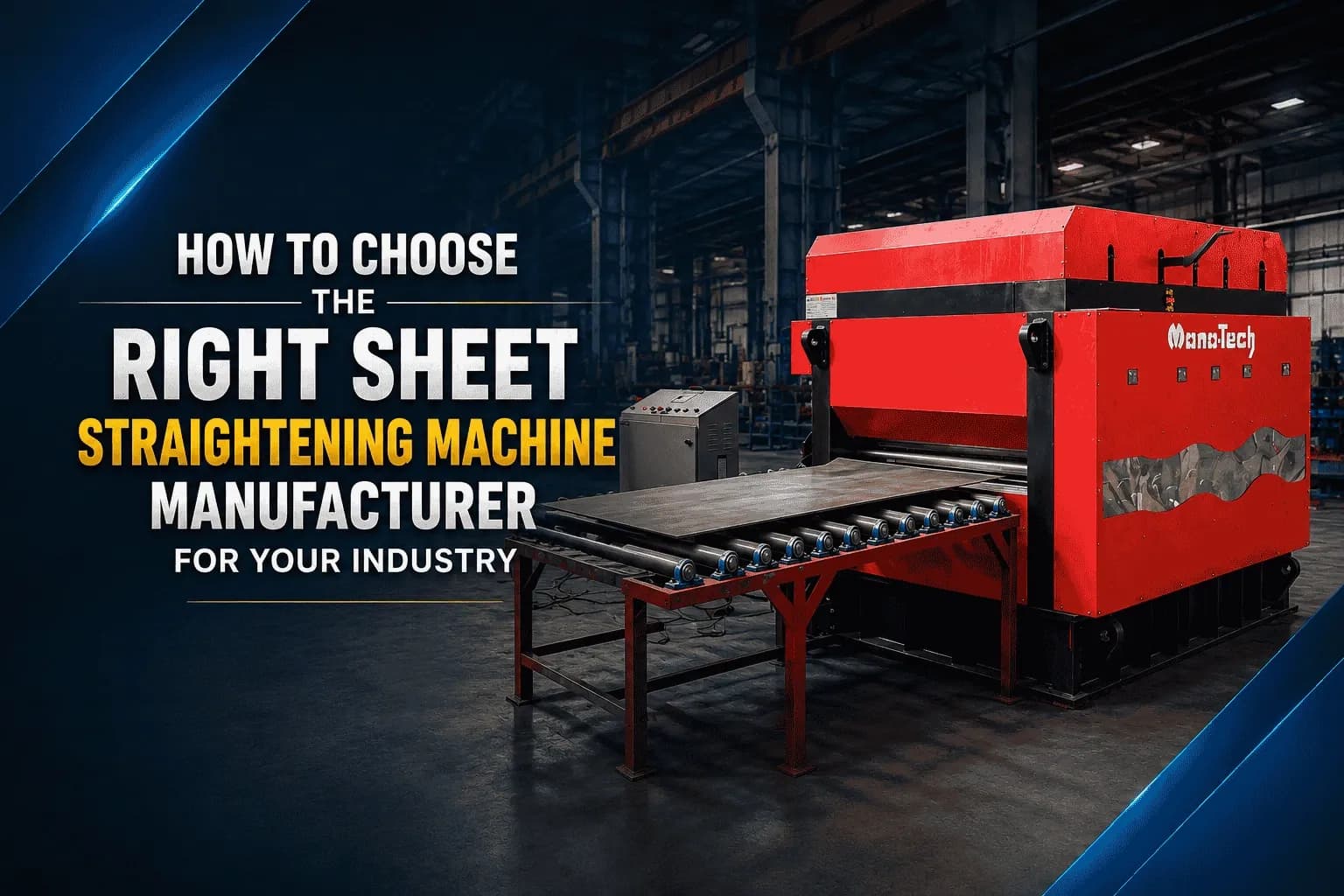
How to Choose the Right Sheet Straightening Machine Manufacturer for Your Industry
Selecting the right Sheet Straightening Machine Manufacturer is an important decision for industries that process metal sheets, plates, and fabricated components. The quality and capability of the machine can directly affect sheet flatness, dimensional accuracy, production efficiency, and overall manufacturing costs.
With many Sheet Straightening Machine Manufacturers offering different machine configurations and specifications, industrial buyers should evaluate more than just the initial machine price. Factors such as straightening capacity, material compatibility, machine construction, automation, precision, customization, and after-sales support should be carefully considered.
This guide explains the key factors to help you choose the right manufacturer for your application.
Why Choosing the Right Sheet Straightening Machine Manufacturer Matters
A sheet straightening machine is designed to correct distortion, waviness, bending, and other flatness-related defects in metal sheets and components. The performance of the machine depends significantly on its design, roller arrangement, control system, and manufacturing quality.
Working with an experienced Sheet Straightening Machine Manufacturer can help you select equipment according to your actual production requirements instead of relying on a standard machine that may not provide the required results.
A reliable manufacturer should understand your material type, sheet thickness, sheet width, production volume, and required flatness tolerance.
1. Understand Your Sheet Straightening Requirements
Before contacting a manufacturer, define your application requirements. Important parameters include:
Maximum sheet thickness
Minimum sheet thickness
Maximum sheet width
Material grade
Yield strength
Component size
Required flatness
Production volume
Straightening accuracy
Required automation level
For example, a machine designed for thin MS sheets may not be suitable for thick, high-strength components. A professional Metal Sheet Straightening Machine Manufacturer should evaluate these parameters before recommending a machine.
2. Check the Manufacturer's Technical Expertise
Technical expertise is one of the most important factors when selecting a Sheet Straightening Machine Manufacturer in India.
An experienced manufacturer should be capable of engineering machines for different industrial applications and material conditions. Look for manufacturers with experience in industries such as:
Heavy engineering
Automotive components
Structural fabrication
Steel fabrication
Railway components
Construction equipment
Industrial machinery
Laser-cut components
General sheet metal fabrication
The manufacturer's experience can be especially important when your application requires customized straightening parameters.
3. Evaluate Machine Construction and Component Quality
Machine construction directly influences straightening accuracy and long-term reliability.
When evaluating an Industrial Sheet Straightening Machine, consider the quality of:
Machine frame
Straightening rollers
Bearings
Drive system
Hydraulic components
Gearboxes
Electrical controls
Control panel
Safety systems
A rigid machine structure helps maintain stability during operation, particularly when processing thicker or high-strength metal sheets.
4. Consider the Number and Arrangement of Rollers
Straightening performance depends on several design factors, including roller diameter, roller arrangement, roller pitch, and the number of straightening rollers.
The manufacturer should select the roller configuration according to the material thickness and application.
For high-precision applications, an appropriately engineered roller arrangement can help achieve consistent flatness across the sheet.
Instead of selecting a machine based only on the number of rollers, discuss your actual material and flatness requirements with the manufacturer.
5. Look for Automation and Precision Controls
Modern Automatic Sheet Straightening Machines can improve production consistency and reduce operator dependency.
Depending on your application, useful features may include:
PLC-based controls
Digital parameter setting
Motorized roller adjustment
Hydraulic adjustment
Automatic positioning
Repeatable straightening programs
User-friendly control panels
Safety interlocks
Automation can be particularly useful for manufacturers processing large quantities of similar components.
6. Check Material Compatibility
Different metals respond differently during straightening. The same machine settings may not be suitable for mild steel, stainless steel, aluminium, or high-strength steel.
Before purchasing, confirm whether the proposed Sheet Metal Straightening Machine is suitable for your material grades and thickness range.
The manufacturer should be able to explain the machine's working range and recommend suitable parameters for your application.
7. Ask About Customization
Industrial requirements can vary significantly from one company to another. A standard machine may not always meet specialized production needs.
A capable manufacturer may provide customized solutions based on:
Sheet width
Sheet thickness
Material grade
Required flatness
Production volume
Automation requirements
Loading and unloading arrangements
Special component geometry
Customization can make the machine more suitable for your existing production line and workflow.
8. Don't Choose a Machine Based Only on Price
Sheet Straightening Machine Price is an important consideration, but the lowest quotation does not necessarily represent the best value.
When comparing machines, consider the total cost of ownership, including:
Initial purchase cost
Installation
Energy consumption
Maintenance
Spare parts
Operator requirements
Downtime
Productivity
Expected service life
A machine with better construction and reliable components may provide greater long-term value even if its initial investment is higher.
9. Evaluate After-Sales Service and Support
After-sales support should be considered before purchasing the machine, not after installation.
Ask the manufacturer about:
Installation and commissioning
Operator training
Warranty
Spare parts availability
Preventive maintenance
Technical troubleshooting
Remote support
Service response
Reliable technical support can help minimize downtime and maintain consistent machine performance.
10. Review Previous Machine Installations
Before finalizing a manufacturer, review their previous installations and industrial experience.
Ask for information about machines supplied for applications similar to yours. Case studies, machine videos, customer references, and production trials can help you evaluate the manufacturer's practical capabilities.
If possible, conduct a material trial using your actual sheets or components. This can provide a better understanding of the machine's straightening performance before purchase.
Why Monotech Engineers Can Be Considered
Monotech Engineers provides industrial metal forming and sheet processing machinery for demanding manufacturing applications.
Its range of straightening solutions can be evaluated for applications requiring improved flatness, dimensional consistency, and controlled straightening of metal sheets and fabricated components.
When selecting a Sheet Straightening Machine Manufacturer, buyers should discuss their exact material thickness, width, grade, production requirements, and desired straightening accuracy with the manufacturer's technical team.
Sheet Straightening Machine Selection Checklist
Before selecting your machine manufacturer, evaluate:
Machine thickness capacity
Maximum sheet width
Material compatibility
Required flatness tolerance
Roller configuration
Machine frame construction
Drive and hydraulic systems
Automation and control features
Customization options
Production capacity
Energy efficiency
Spare parts availability
Installation and training
After-sales service
Manufacturer experience
Conclusion: Sheet Straightening Machine Manufacturer
Choosing the right Sheet Straightening Machine Manufacturer requires more than comparing quotations. The ideal manufacturer should combine engineering expertise, reliable machine construction, suitable technology, customization capabilities, and dependable after-sales support.
By evaluating your material requirements, sheet dimensions, production volume, accuracy expectations, machine configuration, and long-term operating costs, you can make a more informed purchasing decision.
For industries searching for a reliable Sheet Straightening Machine Manufacturer in India, selecting a manufacturer with proven technical capabilities and application-specific experience can help achieve consistent straightening performance and long-term production reliability.
FAQs: Sheet Straightening Machine Manufacturer
1. How do I choose the right Sheet Straightening Machine Manufacturer?
Evaluate the manufacturer's technical experience, machine construction, straightening capacity, customization options, previous installations, and after-sales support. The manufacturer should also understand your material and production requirements.
2. What factors determine a sheet straightening machine's capacity?
Important factors include sheet thickness, sheet width, material grade, yield strength, required flatness, roller configuration, and production requirements.
3. What is a sheet metal straightening machine used for?
A Sheet Metal Straightening Machine is used to correct bending, distortion, waviness, and other flatness defects in metal sheets and fabricated components.
4. Should I consider an automatic sheet straightening machine?
An Automatic Sheet Straightening Machine can be beneficial for production environments where repeatability, faster setup, and consistent straightening results are important.
5. Is Sheet Straightening Machine Price the most important factor?
No. Price should be evaluated along with machine quality, productivity, maintenance requirements, service support, spare parts availability, and expected operating life.