
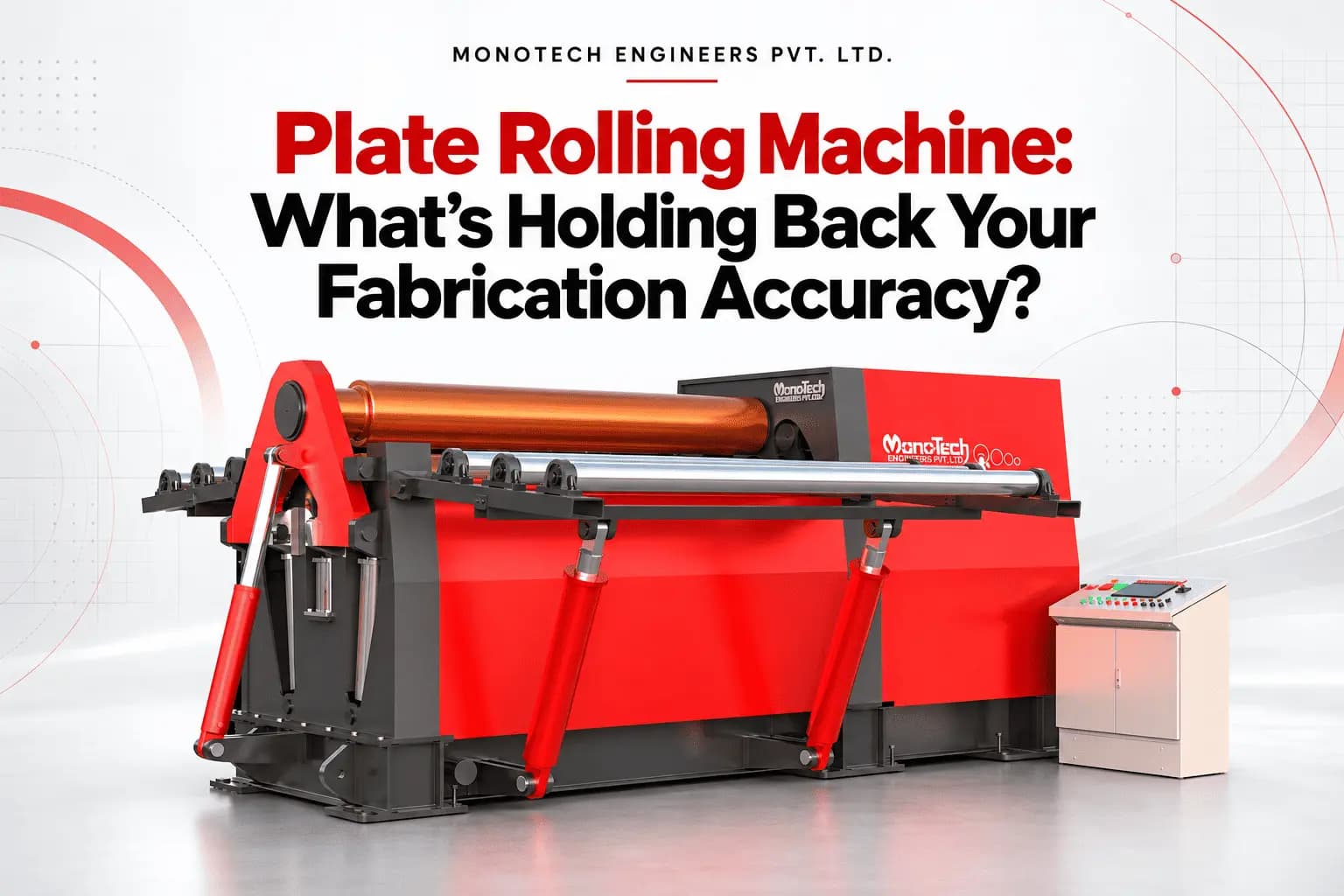
Plate Rolling Machine: What’s Holding Back Your Fabrication Accuracy?
A plate rolling machine should help turn flat metal plates into consistent curved profiles. But when the finished cylinder has uneven curvature, excessive flat ends or edges that do not meet correctly, fabrication slows down.
Extra rolling passes, repeated measurements and fit-up corrections consume production time. These problems can also affect downstream welding and assembly.
What is holding back your fabrication accuracy? The answer may involve the material, machine setup, pre-bending process or the way the rolled component is inspected.
Understanding these factors is the first step towards more predictable plate rolling and less rework.
Why Plate Rolling Machine Accuracy Matters
Rolling accuracy affects more than the appearance of a finished component. It influences how easily that component moves through the next manufacturing stage.
A correctly formed plate helps fabricators achieve:
More consistent cylinder diameters and curved profiles.
Better edge alignment before welding.
Fewer corrective rolling passes.
Smoother fit-up and assembly.
More predictable production times.
However, accuracy should always be assessed against the component drawing. A visually round cylinder may still fall outside the required diameter, roundness or edge-alignment tolerance.
7 Factors That Can Affect Plate Rolling Machine Accuracy
1. Incorrect Roller Alignment and Plate Feeding
Accurate rolling begins with correctly positioning the plate.
If a plate enters at an angle, it can move unevenly through the rollers. This may contribute to skewed edges or an unwanted tapered profile.
Machine alignment also matters. Worn components, inconsistent roller positioning or incorrect adjustments can make repeatable results harder to achieve.
How to improve it: Check plate squareness and feeding alignment before rolling. Verify roller positioning and machine condition according to the manufacturer’s instructions.
2. Inadequate Pre-Bending at the Plate Ends
The centre of a plate may form correctly while the ends retain straight sections. These flat ends can make cylinder closure and welding fit-up more difficult.
Pre-bending helps form the leading and trailing edges before completing the main rolling operation.
A double pre-pinch plate rolling machine can support pre-bending at both ends. The handling sequence depends on the machine design, but suitable double-pinch arrangements can reduce the need to remove and reverse the plate.
How to improve it: Confirm that the machine’s pre-bending capacity matches the plate thickness, width and material grade. Do not assume that its rolling capacity and pre-bending capacity are identical.
3. Material Springback
Metal partially recovers after the bending load is released. This behaviour, known as springback, can leave the finished radius larger than expected.
Different material grades and batches may respond differently, even when the nominal plate dimensions are the same.
Using an unchanged setup for every material can therefore produce inconsistent results.
How to improve it: Establish suitable settings through a controlled trial, inspect the released profile and adjust within the machine’s operating limits. Record successful settings along with the material specification.
4. Plate Thickness and Material Variations
The machine cannot compensate for every variation in incoming material through a single fixed setting.
Actual plate thickness, yield strength and initial flatness can influence the forming response. A setup that works for one plate may need adjustment for another.
This becomes especially relevant when processing mixed material grades or sourcing plates from different suppliers.
How to improve it: Check incoming plate dimensions and material documentation. Keep production records that connect the rolling settings to the material used.
5. Machine Capacity That Does Not Match the Job
Selecting a machine by maximum thickness alone can lead to disappointing results.
The required working width, material strength, target diameter and pre-bending requirement also affect suitability.
For example, a capacity quoted for a particular mild-steel grade should not automatically be applied to higher-strength material at the same thickness.
How to improve it: Evaluate the complete application before selecting or setting up a hydraulic plate rolling machine. Share the material grade, plate width, thickness and required finished diameter with the manufacturer.
6. Inconsistent Rolling Settings and Sequences
Repeated manual adjustments without a defined process can introduce variation between components.
Changes in roller positions, feeding sequence or the number of passes may affect the final profile. When settings are not recorded, each new job can become another trial-and-error exercise.
A CNC plate rolling machine can help repeat programmed positions and sequences. However, repeatable commands still require suitable material, correct setup and inspection.
How to improve it: Standardise successful rolling sequences. Record the setup, inspect the first component and adjust the programme when the material or application changes.
7. Insufficient Support and Inspection
Large or thin-walled rolled components may change shape under their own weight. Without suitable support, measuring the component can give an incomplete picture of its condition.
Checking only one diameter or one location may also miss ovality or variation along the length.
How to improve it: Use appropriate handling and support equipment. Inspect the released component at the locations required by its drawing, using suitable measuring tools.
How to Improve Plate Rolling Machine Accuracy
Improvement starts with a repeatable process that connects material checks, machine setup and inspection.
Define the Required Result
Before rolling, establish the target diameter or radius, acceptable roundness, edge alignment and remaining flat-end allowance.
Clear acceptance criteria help operators distinguish between a usable component and one that needs correction.
Verify the Material and Machine Setup
Check the plate thickness, width, grade and initial condition. Confirm that the machine can perform both the rolling and pre-bending operations required.
Inspect the rollers and relevant machine components before starting production.
Inspect the First Component
Use the first rolled component to validate the setup.
Measure the released profile and compare it with the drawing. Make controlled adjustments before processing the remaining batch.
Record Proven Settings
Save the rolling sequence and relevant settings for repeat jobs. Include material details so operators know when a previous setup is applicable.
Maintain the Machine
Follow the manufacturer’s maintenance schedule. Reliable positioning, clean roller surfaces and properly maintained components support consistent operation.
Choosing the Right Plate Rolling Machine for Your Application
The best machine choice depends on the work your factory needs to perform.
Before investing, discuss:
Material grade and strength.
Minimum and maximum plate thickness.
Plate width and required working length.
Target cylinder diameter or curved profile.
Pre-bending requirements.
Cylinder and cone rolling applications.
Production volume and repeatability needs.
Handling, support and inspection requirements.
A CNC plate rolling machine may be useful for repeat production, while a hydraulic plate rolling machine may suit applications requiring controlled roller movement and forming force. These features can be combined in the same machine.
The priority is matching the machine configuration to the actual job.
Discuss Your Plate Rolling Requirements with Monotech Engineers
At Monotech Engineers Pvt. Ltd., the starting point is your fabrication requirement.
Whether you need cylinder rolling, cone forming or repeat production of curved components, selecting suitable machinery begins with understanding the material and finished profile.
Share your plate thickness, width, material grade, required diameter and production needs with our team to discuss an appropriate plate rolling machine.
Explore our metal forming machinery:
Monotech Engineers Pvt. Ltd.
Frequently Asked Questions
What factors affect the accuracy of a plate rolling machine?
Roller alignment, plate feeding, material properties, springback, pre-bending, machine condition and rolling settings can affect accuracy. The finished component should be checked against its drawing tolerances.
Why does a plate rolling machine produce an inconsistent radius?
An inconsistent radius can result from unsuitable roller settings, material variations, springback or an inconsistent rolling sequence. Identifying the cause requires checking both the incoming plate and the machine setup.
How does double pre-pinching improve plate rolling accuracy?
Double pre-pinching supports pre-bending at both ends of the plate, helping reduce straight end sections and improve cylinder fit-up. The remaining flat-end length depends on the machine design, material and setup.
Can a CNC plate rolling machine reduce fabrication errors?
CNC controls can help repeat programmed roller positions and rolling sequences, reducing variation from repeated manual adjustments. Accurate results still depend on material consistency, correct setup and inspection.
How can manufacturers reduce rework during plate rolling?
Verify material specifications, check feeding and roller alignment, use suitable pre-bending settings and inspect the first component. Recording proven setups and maintaining the machine also help improve consistency.