
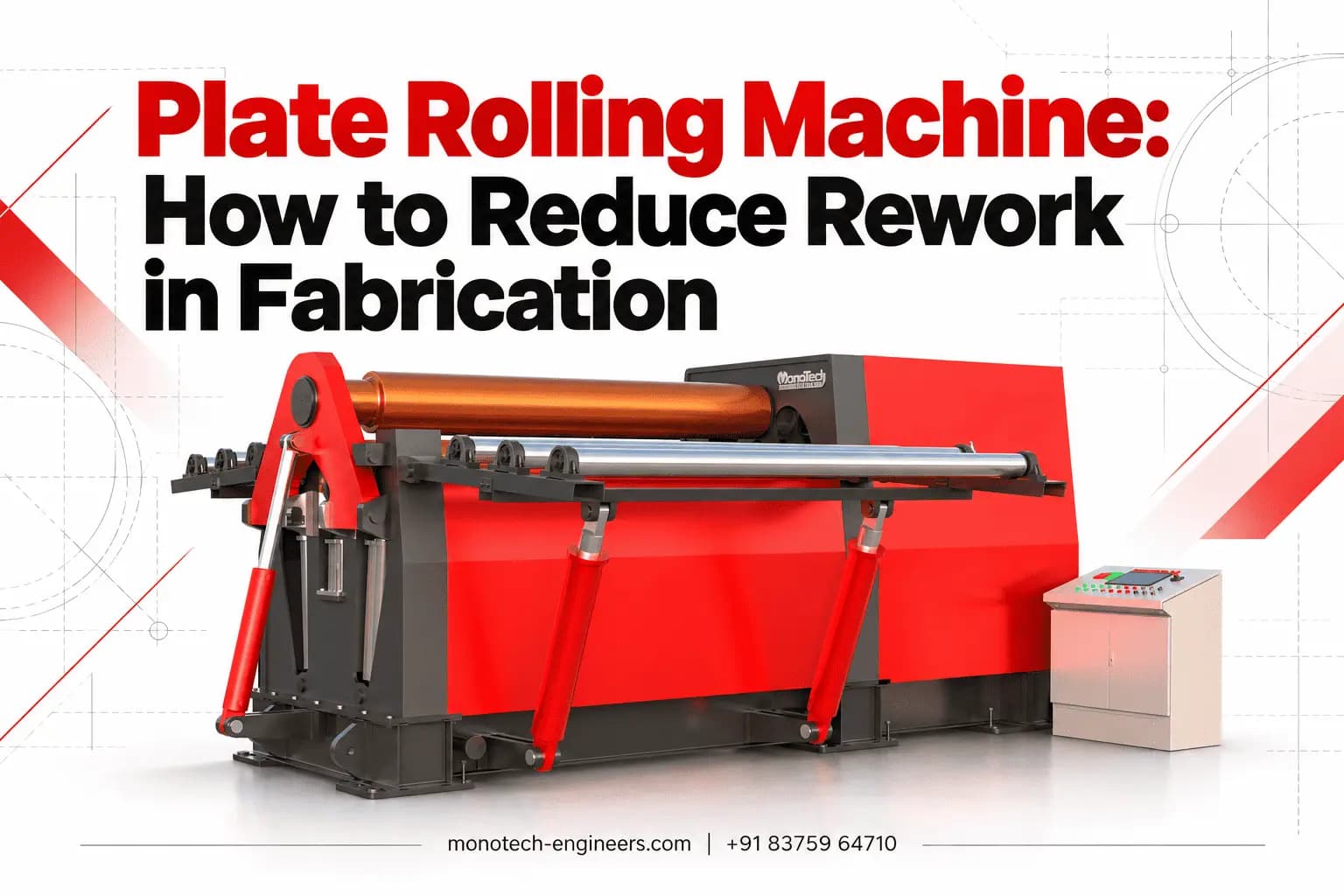
Plate Rolling Machine: How to Reduce Rework in Fabrication
A Plate Rolling Machine helps reduce fabrication rework by forming metal plates into controlled curves for cylinders, cones and other rolled components. When the machine matches the application and the plate is prepared correctly, fabricators can improve dimensional consistency and reduce repeated corrective rolling.
Rework in plate fabrication often involves adjusting uneven curves, correcting straight plate ends or improving seam alignment before welding. These additional steps consume production time and increase material handling.
Reducing these problems starts with suitable machine capacity, effective pre-bending, correct roller alignment and consistent operating settings.
How Does a Plate Rolling Machine Reduce Fabrication Rework?
A Plate Rolling Machine forms a plate through controlled roller movement. The roller positions, material properties and operating sequence influence the finished radius.
When these factors are properly managed, the machine helps produce components closer to the required dimensions. This can reduce the need for repeated adjustments and simplify the next fabrication stage.
Common causes of rolling rework include:
Insufficient rolling or pre-bending capacity.
Incorrect settings for the material grade.
Excessive straight portions at the plate ends.
Misaligned plate feeding.
Inadequate support during rolling.
Delayed inspection of the component’s shape.
Understanding the cause of a dimensional error helps operators make targeted corrections instead of repeating passes without a clear approach.
Choose the Right Plate Rolling Machine for Your Application
Machine selection should consider the complete component requirement. Plate thickness is important, but it must be assessed alongside plate width, material strength and the required diameter.
A machine’s capacity for mild steel may differ from its capacity for stainless steel or higher-strength material. Similarly, rolling a smaller diameter can require greater bending effort.
Before selecting a machine, identify:
Material grade and yield strength.
Plate thickness and width.
Required cylinder diameter.
Finished component length.
Pre-bending requirements.
Cylinder or cone production needs.
Expected production volume.
Checking plate thickness and rolling capacity together helps avoid selecting a machine that requires excessive correction passes or cannot achieve the intended component.
Rolling capacity and pre-bending capacity should also be confirmed separately, as they may differ for the same machine.
Why Pre-Bending Matters in a Plate Rolling Machine
One common challenge in steel plate rolling is the straight section that can remain at each end of the plate. If these ends are not formed adequately, they may affect the cylindrical profile and make seam fit-up more difficult.
Plate pre-bending helps form the leading and trailing ends before completing the rolling process. This reduces the straight portions and supports a more uniform curved shape.
A Double Pre-Pinch Plate Rolling Machine allows both plate ends to be pre-bent within the machine, reducing the need to remove and reverse the plate, depending on its design and operating sequence.
For repeat production, double pre-pinch rolling can reduce handling and improve workflow. The achievable result depends on plate properties, machine geometry and the available pre-bending capacity.
Improve Bending Control with a Hydraulic Plate Rolling Machine
A Hydraulic Plate Rolling Machine uses hydraulic actuation for the relevant roller movements and machine functions. Controlled positioning helps operators manage the forming process during metal plate bending.
For demanding applications, this control is useful when making gradual adjustments to reach the required shape. However, consistent results also depend on correct setup, adequate capacity and maintained machine components.
To improve the hydraulic plate bending process:
Follow the manufacturer’s operating procedure.
Confirm roller positions before feeding the plate.
Keep the workpiece aligned and adequately supported.
Check the developing radius during rolling.
Maintain hydraulic components and moving assemblies.
These practices help reduce avoidable variation and unnecessary adjustment work.
Improve Repeat Production with an Automatic Plate Rolling Machine
An Automatic Plate Rolling Machine can help standardize suitable rolling operations and reduce variation between repeated components.
For recurring jobs, automation can support consistent roller movements and operating sequences. This is particularly useful when producing batches with similar plate dimensions, material specifications and target diameters.
A CNC Plate Rolling Machine, where programmable control is available, can store and repeat positioning sequences for suitable applications.
The first component should still be inspected before continuing production. Changes in material thickness or strength can affect the final shape, even when a saved program is used.
Verified settings, consistent material preparation and regular inspection help fabricators get better results from automated rolling.
Check Roller Alignment and Plate Feeding
Correct roller alignment and plate feeding are essential for accurate rolling. A plate that enters the machine at an angle may develop skew or an uneven profile.
Before beginning production, check the plate dimensions, edge condition and feeding position. Confirm that the plate is aligned according to the machine’s operating procedure.
During rolling, suitable support helps control the workpiece as its shape changes. This is especially relevant in heavy plate fabrication, where component weight and handling requirements can influence the process.
Early checks help operators identify alignment problems before they affect the entire component.
Manage Springback for Better Plate Rolling Machine Accuracy
Springback occurs when metal partially returns toward its original shape after the bending force is released. It affects the finished radius and varies with material grade, strength and thickness.
This means the same roller settings may produce different results when the material changes.
To maintain a consistent rolling radius, inspect the first component and adjust the settings based on its actual dimensions. Record successful settings for repeat jobs and verify them when a new material batch is introduced.
This approach supports better plate rolling accuracy and reduces reliance on repeated trial-and-error corrections.
Plan Cylinder and Cone Rolling Carefully
Cylinder and cone rolling involve different forming requirements. A cylinder needs a consistent radius along its length, while a cone requires a controlled change in diameter.
Cone rolling may require suitable machine features, accessories and a specific operating sequence. These requirements should be discussed before selecting the machine.
For cone applications, provide:
Large-end diameter.
Small-end diameter.
Cone length.
Plate thickness.
Material grade.
Clear application details help determine whether the proposed machine configuration can produce the required shape.
Inspect During Rolling to Reduce Rework
Waiting until the final pass to inspect a component can allow small errors to become larger correction tasks.
Check the developing radius, plate alignment and end shape at suitable stages during the process. Use appropriate measuring tools or templates according to the component requirements.
For repeat jobs, maintain a record of the material specification, roller settings and inspection results. These records help operators establish a consistent starting point for future production.
Reduced fabrication rework comes from controlling the process throughout the job, from machine selection to final dimensional checks.
Discuss Your Plate Rolling Machine Requirements with Monotech Engineers
Choosing a suitable Plate Rolling Machine begins with understanding the material and the finished component.
Monotech Engineers offers plate rolling solutions for fabrication applications. Whether you require an Automatic Plate Rolling Machine, a Hydraulic Plate Rolling Machine or a Double Pre-Pinch Plate Rolling Machine, selection should be based on your rolling and pre-bending requirements.
Share your material grade, plate thickness, plate width, required diameter and production volume with Monotech Engineers to discuss a suitable solution.
Website: monotech-engineers.com
Contact: +91 83759 64710
Plate Rolling Machine: Frequently Asked Questions
1. How does a Plate Rolling Machine help reduce rework in fabrication?
A Plate Rolling Machine helps achieve consistent curves through controlled roller movement and correct settings. Proper setup reduces shape variations, repeated adjustments and corrective rolling.
2. Why is pre-bending important in plate rolling?
Pre-bending reduces the straight portion at the plate ends, helping achieve a more uniform cylindrical shape. A Double Pre-Pinch Plate Rolling Machine can pre-bend both ends, reducing the need to remove and reverse the plate, depending on its configuration.
3. What affects the accuracy of a Plate Rolling Machine?
Plate thickness, material strength, roller alignment, target diameter, springback and operator settings affect rolling accuracy. Selecting a machine suited to the application and inspecting during rolling help improve consistency.
4. Can an Automatic Plate Rolling Machine produce cylinders and cones?
Yes, an Automatic Plate Rolling Machine can produce cylinders and, with suitable cone-rolling features, conical shapes. The achievable dimensions depend on the machine’s capacity and configuration.
5. How do I choose the right Plate Rolling Machine for my fabrication needs?
Consider material grade, plate thickness, plate width, required diameter and production volume. Share these details with Monotech Engineers to discuss a suitable machine and confirm its rolling and pre-bending capacities.