
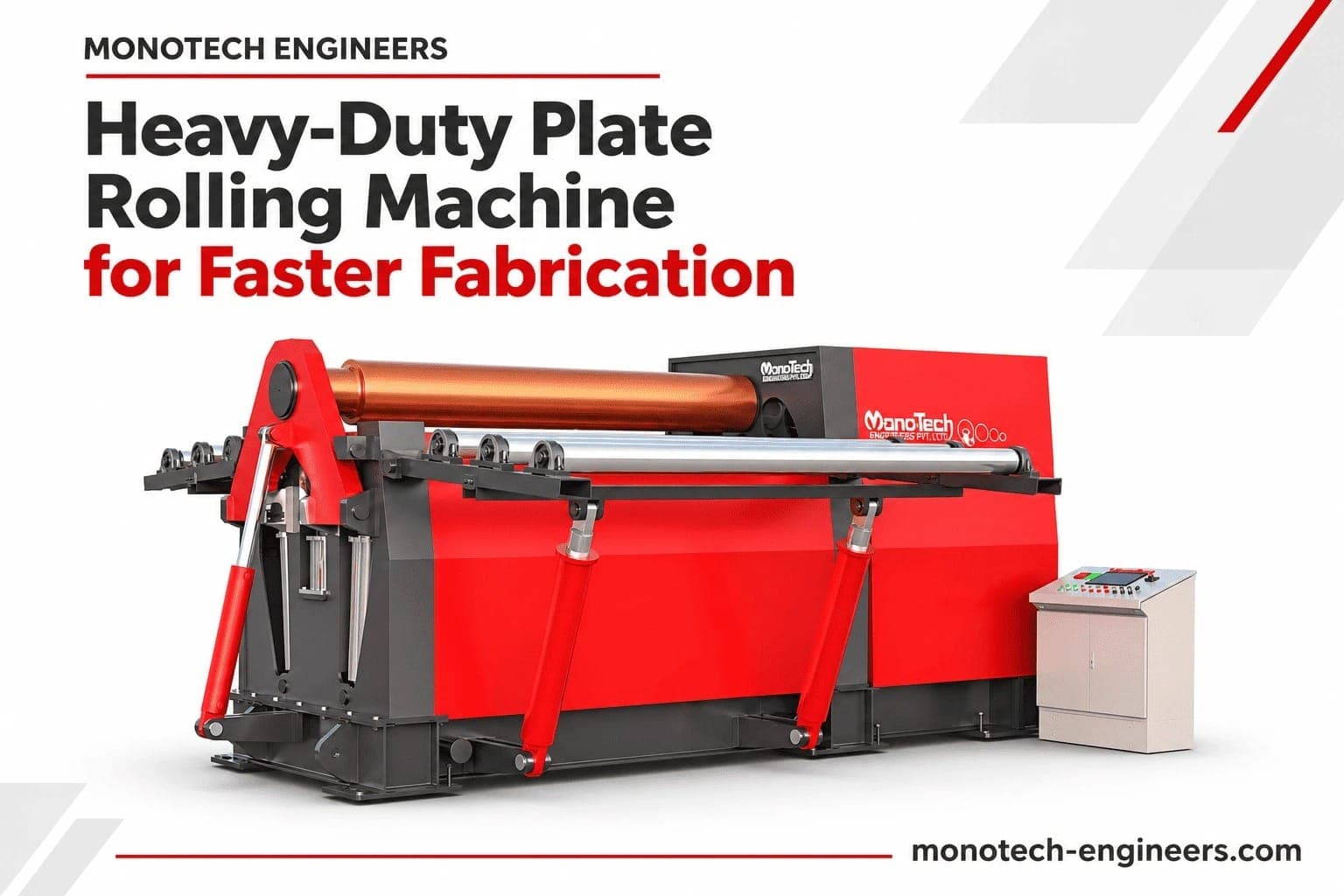
Heavy Duty Plate Rolling Machine for Faster Fabrication
Fabrication speed depends on more than how quickly a plate moves through the rollers. Plate positioning, edge preparation, repeated adjustments and corrections all influence the time required to produce a finished component.
A heavy duty plate rolling machine helps fabricators manage these stages more efficiently when its capacity and configuration match the job. For workshops producing cylindrical shells, tanks, structural components and curved steel sections, the right machine can support smoother production and more consistent results.
For businesses evaluating heavy steel fabrication equipment, the goal should be clear: select a machine that handles the required material while reducing unnecessary handling and rework.
What Is a Heavy Duty Plate Rolling Machine?
A heavy duty plate rolling machine forms flat metal plates into curved profiles using controlled pressure between rollers. Depending on the machine configuration and tooling, it can produce cylindrical shells, curved segments and conical components.
Unlike a machine selected only for occasional light fabrication, a heavy plate bending machine must be assessed against demanding operating conditions. These include plate thickness, working width, material yield strength and the required finished diameter.
“Heavy duty” alone does not define a machine’s capability. Buyers should examine its documented capacity, construction, drive arrangement and suitability for their actual components.
How Plate Rolling Can Improve Fabrication Speed
Faster fabrication comes from improving the complete forming process. A machine that rolls quickly may still create production delays if operators must repeatedly reposition the plate or correct the finished shape.
The most useful improvements typically come from:
More controlled plate feeding and positioning.
Effective pre-bending of the leading and trailing edges.
Repeatable roller settings for similar components.
Suitable supports for handling large workpieces.
Easier removal of the finished shell.
The benefit depends on the application. A repeat production job may gain most from stored machine settings, while a workshop handling large shells may benefit more from improved loading and workpiece support.
Before investing, compare the complete production cycle, from plate loading to component removal.
Why Consider a 4 Roll Plate Rolling Machine?
A 4 roll plate rolling machine uses a top roll, bottom roll and two side rolls. The arrangement allows the plate to be clamped while the side rolls control bending.
This configuration can simplify plate positioning and support integrated pre-bending and rolling. Manufacturer documentation also identifies plate clamping and reduced flat ends as advantages of suitable four-roll designs.
For fabricators producing repeated cylindrical components, these characteristics can help establish a more consistent forming sequence.
However, the number of rollers should not be the only selection factor. Compare machines using the same material strength, plate width, thickness and finished diameter. A suitable three-roll machine may also meet the application, depending on production requirements.
Double Pre-Pinching and the Plate Pre-Bending Process
The edges of a plate need particular attention during cylindrical shell fabrication. If the leading and trailing ends remain too straight, additional correction may be required before fit-up and welding.
The plate pre-bending process forms these edge areas closer to the required curvature. A double pre-pinch plate rolling machine is designed to pre-bend both ends as part of the forming sequence.
Effective pre-bending can help reduce the remaining flat portions and improve the transition into the rolled section. It should not be treated as a guarantee of zero flat ends under every operating condition.
Ask the manufacturer to demonstrate edge quality using a plate specification and shell diameter similar to your production requirement.
Hydraulic Control and Repeatable Production
A hydraulic plate rolling machine uses hydraulic systems to control specified machine movements. The exact arrangement varies between models, so buyers should check which rolls are hydraulically positioned and how their movements are monitored.
For repeat production, an automatic plate rolling machine with suitable NC or CNC controls may help operators recall settings and follow a programmed sequence.
When comparing control systems, assess practical functions such as:
Roller position display and adjustment.
Storage of settings for repeat components.
Control of the pre-bending sequence.
Operator access to corrections.
Availability of training and technical support.
Automation can support repeatability, but consistent output also depends on material variation, plate preparation and correct setup. Request a demonstration using the type of component you intend to manufacture.
Choose Capacity Beyond Plate Thickness
A machine described as suitable for a particular thickness is not automatically suitable for every plate of that thickness.
Capacity must be considered alongside working width, material yield strength and bending diameter. Published manufacturer capacity tables specify material strength and width conditions, and distinguish rolling capacity from pre-bending capacity.
Before selecting a steel plate rolling machine, provide the supplier with:
Material grade and yield strength.
Maximum and typical plate thickness.
Plate width.
Required shell inside diameter.
Pre-bending requirements.
Expected production quantity.
Any cone rolling or special-profile requirements.
For example, a capacity quoted for one material grade should not be applied directly to a higher-strength grade without checking the manufacturer’s capacity data.
Likewise, confirm the minimum achievable shell diameter for the specific thickness and width being processed.
Applications in Heavy Fabrication
A heavy duty plate rolling machine can support businesses producing curved steel components for a range of fabrication projects.
Typical applications include tank shells, industrial ducting, equipment housings, structural cylinders and curved plate sections. Cone rolling may also be possible where the machine includes the necessary arrangement and accessories.
Each application brings different priorities. Tank shell production may demand consistent diameter and edge fit-up, while large curved sections may require additional handling equipment.
For components used in regulated equipment, forming capability must be considered alongside the applicable material, welding, inspection and design requirements.
How to Select a Plate Rolling Machine Manufacturer
Selecting a plate rolling machine manufacturer involves more than comparing purchase prices. The supplier should understand your component drawings, explain capacity limits and demonstrate a practical production method.
Ask for a quotation that clearly identifies rolling capacity, pre-bending capacity, material assumptions, controls, included accessories and installation requirements.
Also discuss operator training, maintenance access, spare parts and service availability. These factors influence how effectively the machine can support production after installation.
A useful machine trial should show the full process: loading, alignment, pre-bending, rolling, checking and unloading.
Discuss Your Requirement with Monotech Engineers
Choosing the right heavy duty plate rolling machine starts with understanding the workpiece.
Share your material grade, thickness, plate width, required shell diameter and production target with Monotech Engineers to discuss a suitable plate rolling solution.
Whether your priority is improved edge preparation, repeat production or heavy plate forming, an application-based discussion helps establish the machine configuration and capacity your fabrication process requires.
FAQs:Heavy Duty Plate Rolling Machine
1. What is a heavy duty plate rolling machine used for?
It forms flat metal plates into cylindrical shells, curved sections and other rounded components. Common applications include tanks, ducts, equipment housings and structural fabrication.
2. How does a heavy duty plate rolling machine improve fabrication speed?
A suitable machine can reduce time spent on plate positioning, edge pre-bending, repeated setup and shape correction. Actual productivity depends on the component, material, handling arrangement and operator setup.
3. What thickness can a heavy duty plate rolling machine handle?
There is no single thickness range for all machines. Check the model’s capacity table against plate width, material yield strength, required diameter and whether the operation involves rolling or pre-bending.
4. What are the advantages of a 4 roll plate rolling machine?
A four-roll arrangement provides plate clamping and supports controlled pre-bending and rolling. Depending on the model and application, this can simplify handling and help produce consistent curved components.
5. What should I check before buying a heavy duty plate rolling machine?
Check rolling and pre-bending capacities, material strength assumptions, working width, minimum shell diameter, controls, handling accessories and service support. Request a trial using a representative component wherever practical.