
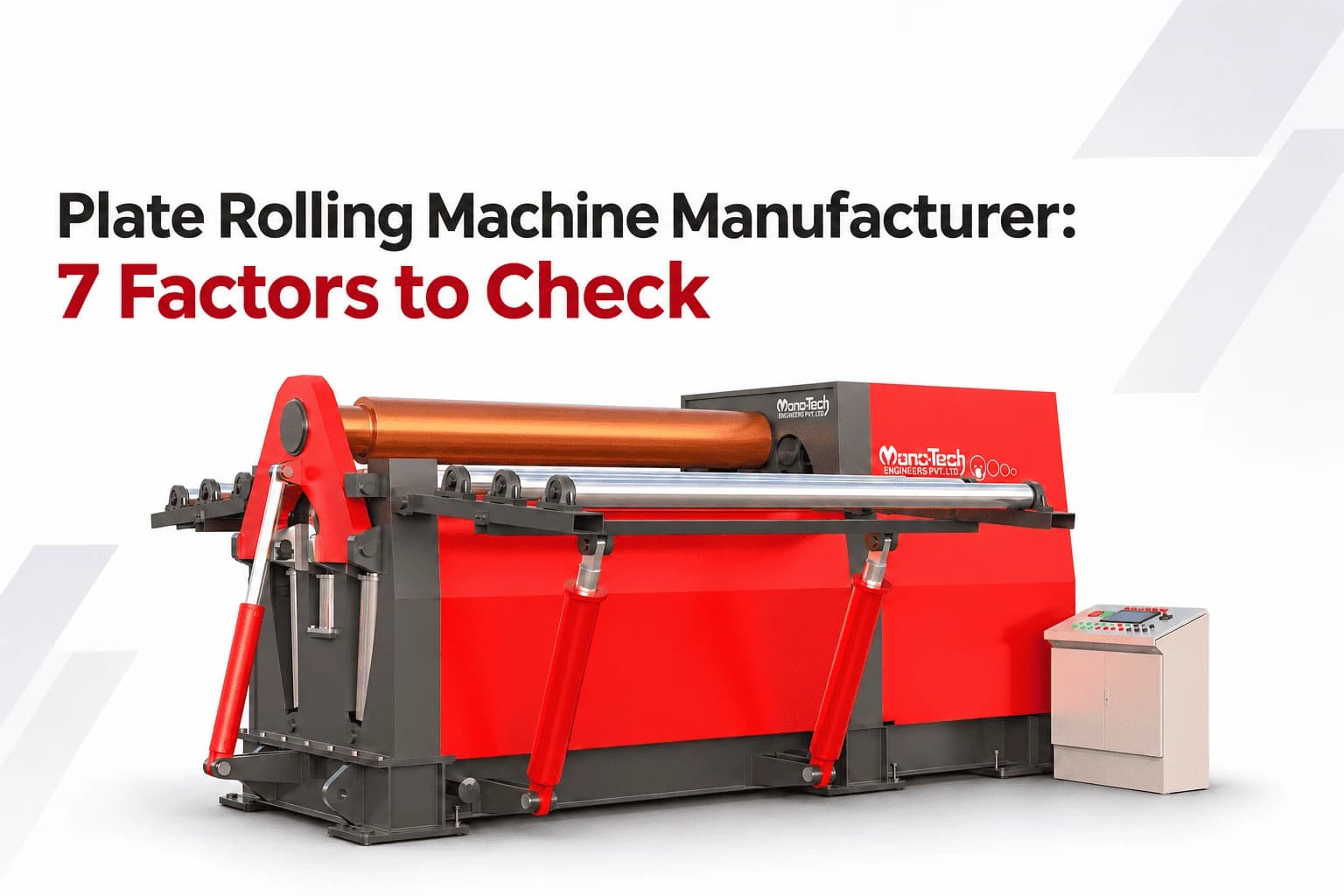
Plate Rolling Machine Manufacturer: 7 Factors to Check
Choosing a plate rolling machine manufacturer starts with the parts you need to produce. A machine’s rated thickness gives you a starting point, but your results also depend on plate width, material yield strength, target diameter and the straight section you can accept at each end. Whether you fabricate tanks, cones or heavy equipment components, use these seven checks to compare suppliers and write a clearer purchase specification.
1. Check Rolling and Pre-Bending Capacity Separately
Ask each supplier for rolling and pre-bending capacities at your actual plate width, material yield strength and target diameter. Rolling forms the main curve of the plate. Pre-bending forms the ends before the main rolling pass, reducing the straight sections near the seam.
For example, if you need to roll a 12 mm plate, ask whether the machine can also pre-bend that 12 mm plate at your required width and inside diameter. Request written figures for both operations so you can compare quotes on the same basis.
2. Compare 3-Roll and 4-Roll Configurations
A 3-roll plate rolling machine can suit fabrication shops with varied jobs and lower production volumes. A 4-roll plate rolling machine can simplify plate handling by gripping the plate between the top and bottom rolls while the side rolls form the curve. That arrangement can help when production involves repeated batches of the same part.
Ask the manufacturer to demonstrate how the operator feeds, squares, pre-bends and unloads your part. If you’re evaluating a double pre-pinch plate rolling machine, ask how it pre-bends both ends and whether the operator needs to remove or reposition the plate.
3. Confirm Minimum Diameter and Flat-End Length
Two machines with similar thickness ratings can produce different results at a tight diameter. Give the supplier your smallest required inside diameter, along with the corresponding plate thickness, width and material grade. Ask for the expected flat-end length at both ends under those conditions.
For cylinders that will be seam-welded, long flat ends may require extra trimming or corrective forming. Put the agreed flat-end limit and diameter tolerance in the purchase specification so you can measure both during acceptance testing.
4. Match the Controls to Your Production Mix
If your shop regularly runs repeat jobs, an NC plate rolling machine with recipe storage can help operators recall roll positions and forming sequences. During the demonstration, have the operator load a saved program, run another part and compare it with the first. Ask which adjustments the operator still needs to make when switching material grades or batches.
If you frequently roll cones or wide shells, confirm whether the quotation includes cone-rolling equipment, side supports or overhead supports. Check that these accessories suit your part dimensions and handling setup.
5. Request a Machine Trial With Representative Material
A trial is most informative when the plate matches your planned material grade, thickness and width. Pick a representative part that tests a requirement you care about, such as your smallest inside diameter or widest recurring job.
Agree on what you’ll measure before the trial. Typical checks include inside diameter, roundness, flat-end length and cycle time. If you’re buying for batch production, ask the supplier to form multiple parts using the same settings. Record the results and use the agreed tolerances for formal acceptance.
6. Verify Installation, Training and After-Sales Support
When comparing plate rolling machine manufacturers in India, ask who will handle installation, commissioning and operator training at your site. Confirm what your team must arrange in advance, including foundation work, electrical connections and lifting equipment.
Review the warranty scope and ask which spare parts the supplier stocks, what lead times apply and how service calls are handled in your region. Ask for a reference installation with a similar application and, if possible, speak with the customer about commissioning and service response.
7. Compare the Total Cost of Ownership
Compare quotations using the same scope. Include freight, installation, training, accessories, routine maintenance and spare parts. If a trial shows differences in setup time, handling or rework, estimate what those differences would cost at your expected annual production volume.
When you request a quote from Monotech Engineers, share your material grades, plate dimensions, required inside diameters and typical batch sizes. A part drawing is especially helpful for cones or components with tight tolerances.
FAQs: Plate Rolling Machine Manufacturer
How do I choose a reliable plate rolling machine manufacturer?
Look for written capacity data at your actual job conditions, a trial with representative material and clear commitments on installation, warranty and service.
Is a 4-roll machine better for every fabrication shop?
The choice depends on your parts, batch sizes and handling needs. Compare both configurations using your typical jobs and measure the time needed to complete a part.
What information should I share for a plate rolling machine quote?
Provide plate thickness, width, material grade or yield strength, target inside diameter, part shape, allowed flat-end length and expected production volume.